Notes & intervals
The smallest pieces. Pitch, distance, and the intervals you'll use every day.
INTERVAL
The distance between two notes. Counted in keys on a keyboard.
Example: A to C is an interval.
KEY
The home note of a track, plus its scale. Everything wants to resolve back home.
Example: "in A minor" means A is home.
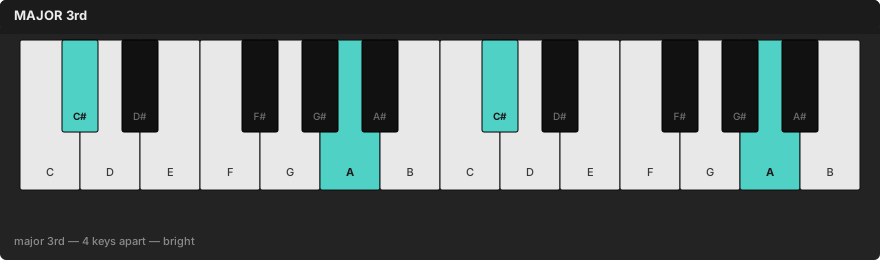
MAJOR 3RD
The bright third. Four keys up. The note that makes "major" major.
Example: A to C#.
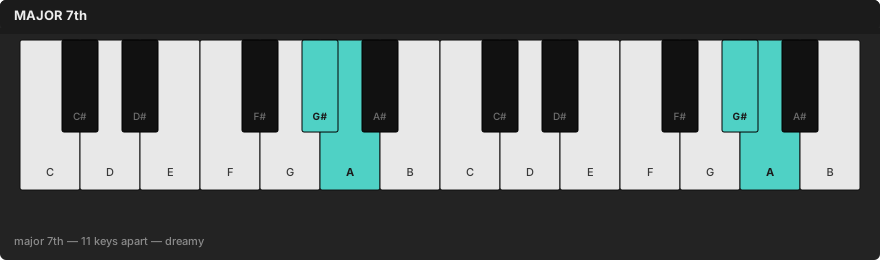
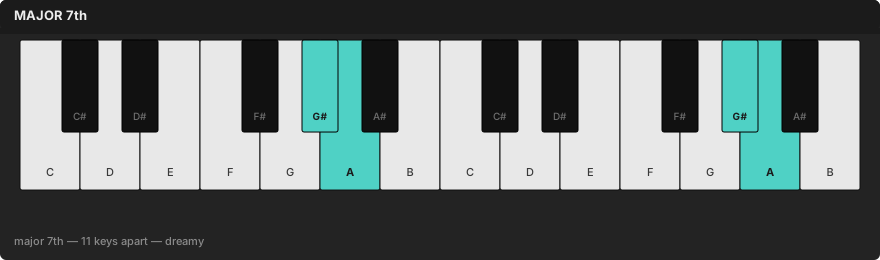
MAJOR 7TH
The dreamy seventh. Eleven keys up. It pulls hard.
Example: C to B — hear it lean.
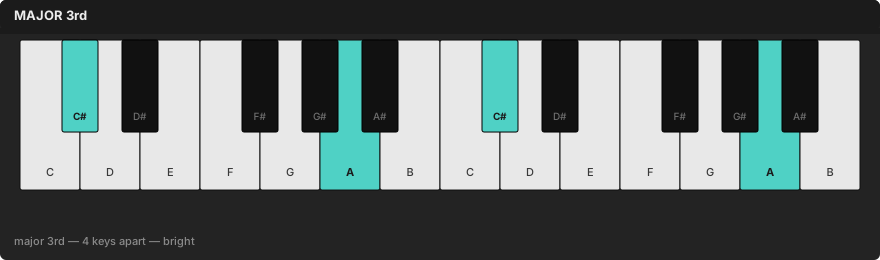
MINOR 3RD
The sad third. Three keys up. The note that makes "minor" minor.
Example: A to C.
MINOR 7TH
The groovy seventh. Ten keys up. Barely wants to resolve.
Example: A to G — the tech-house interval.
OCTAVE
The same note, twelve keys higher. Double the pitch.
Example: A1 to A2.
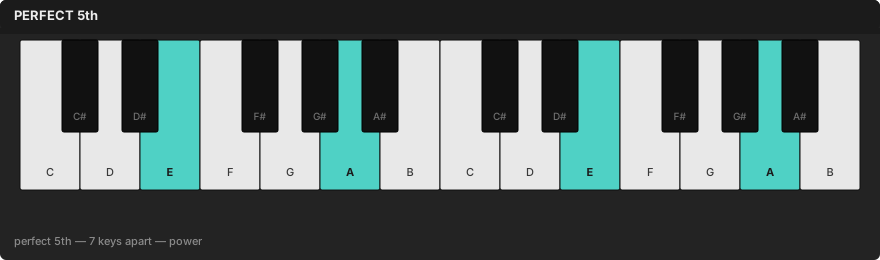
PERFECT 5TH
The strong fifth. Seven keys up. The most settled sound after the octave.
Example: A to E.
ROOT
The home note of a chord or scale. Everything stacks on it.
Example: in Am7, A is the root.
SEMITONE
One key to the next. The smallest step on a keyboard.
Example: E to F is a semitone.
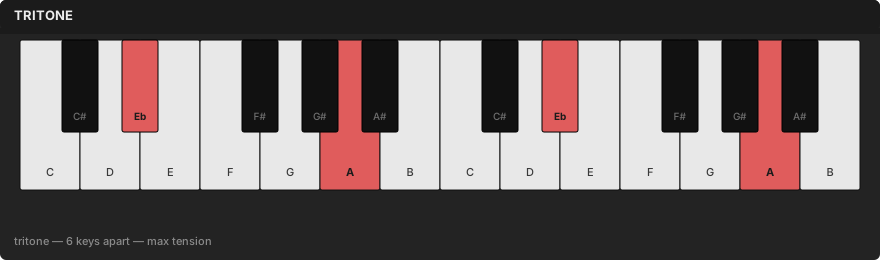
TRITONE
Six keys up. Maximum tension. Your ear hears pure unrest.
Example: the G#–D clash inside E7.
Scales & modes
Note collections with a home. The palettes your tracks are painted in.
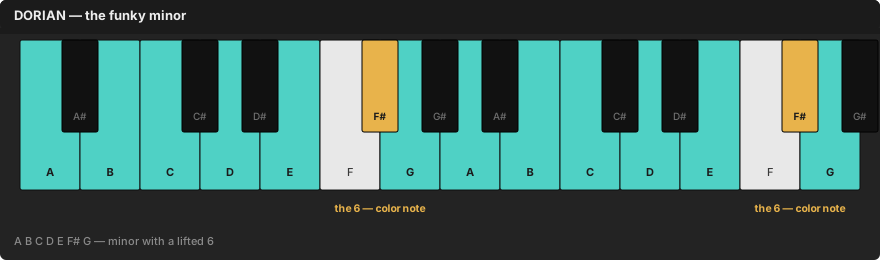
DORIAN
A minor scale with a bright 6th. Minor, but lifted.
Example: in A, play F# instead of F.
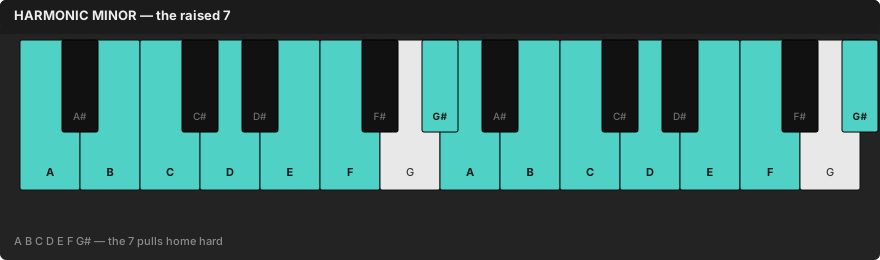
HARMONIC MINOR
Natural minor with a raised 7th. Gives you a strong V chord.
Example: A minor with G# — the drop resolves harder.
MAJOR SCALE
The happy default. Seven notes.
Example: C D E F G A B.
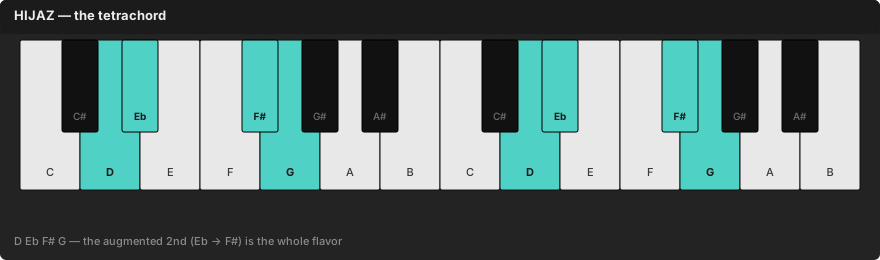
MAQAM
A Middle Eastern melodic system. Not just notes — a path, ornaments, and a mood.
Example: Hijaz — the "indie tech" sound.
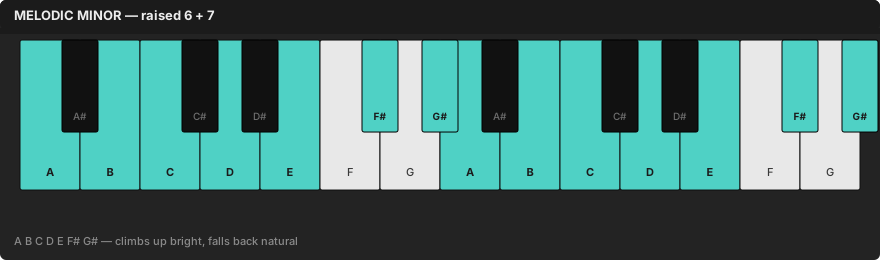
MELODIC MINOR
Natural minor with a raised 6th and 7th. Smooth, almost major.
Example: A minor with F# and G#.
MICROTONE
A note between the piano keys. Smaller than a semitone.
Example: the neutral 3rd in maqam Rast.
MODE
A scale with a new home note. Same notes, different home, different mood.
Example: D Dorian uses the C-major notes with D as home.
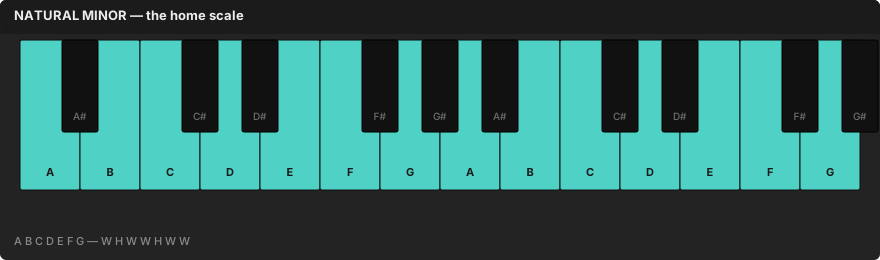
NATURAL MINOR
The sad default scale. Your loops live here.
Example: A B C D E F G.
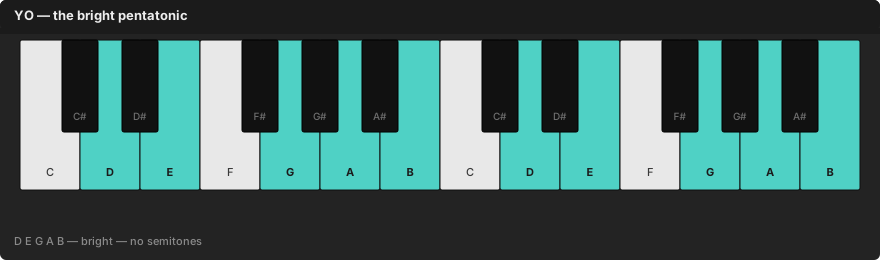
PENTATONIC
A five-note scale. Simple, no clashes.
Example: the Yo scale — bright and open.
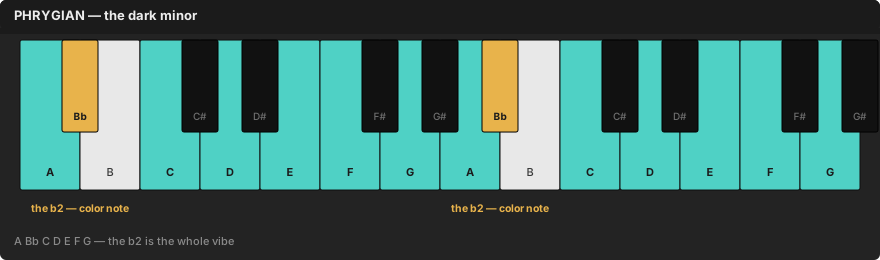
PHRYGIAN
A dark minor mode. The flat 2nd is its color.
Example: in A, play Bb — instant tension.
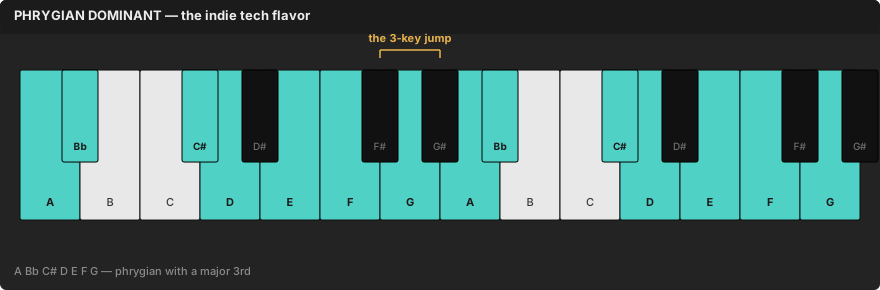
PHRYGIAN DOMINANT
Phrygian with a major 3rd. The indie tech scale.
Example: A–Bb–C# — that jump is the sound.
SCALE
A set of notes that sound good together.
Example: A minor — A B C D E F G.
Chords
Notes stacked together. The stabs, pads, and turnarounds.
CHORD
Three or more notes played together.
Example: A–C–E, all at once.
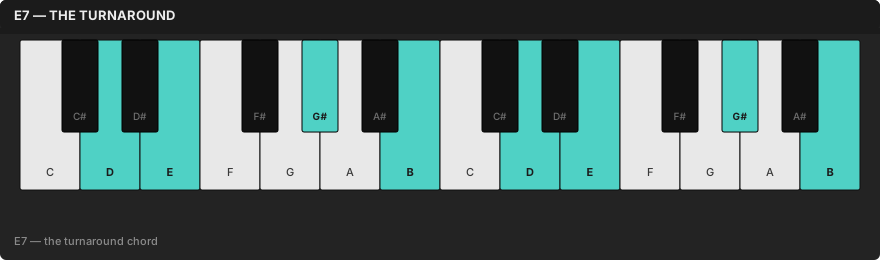
DOMINANT 7TH
Major triad plus a flat 7th. Restless, pulls forward.
Example: E7 — the turnaround chord.
INVERSION
The same chord with a different note on the bottom.
Example: C–E–G vs E–G–C — same chord, smoother move.
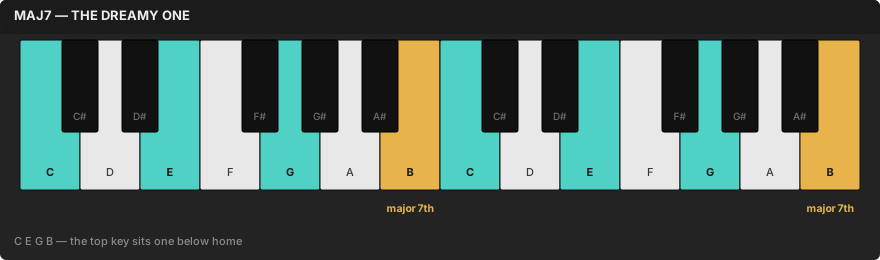
MAJOR 7TH CHORD
Major triad plus a major 7th. Dreamy, bittersweet.
Example: Cmaj7 — save it for breakdowns.
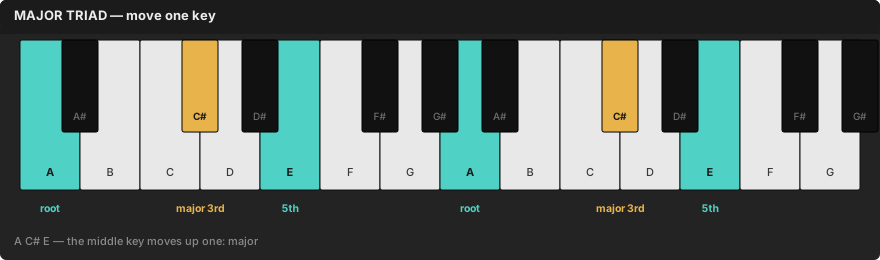
MAJOR TRIAD
Root + major 3rd + 5th. Bright.
Example: A–C#–E.
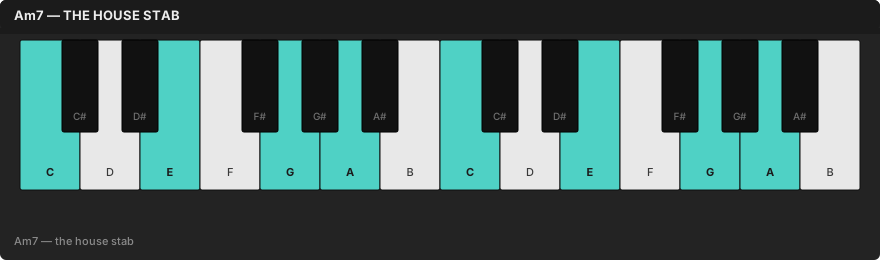
MINOR 7TH CHORD
Minor triad plus a flat 7th. The house stab.
Example: Am7 — the genre's chord.
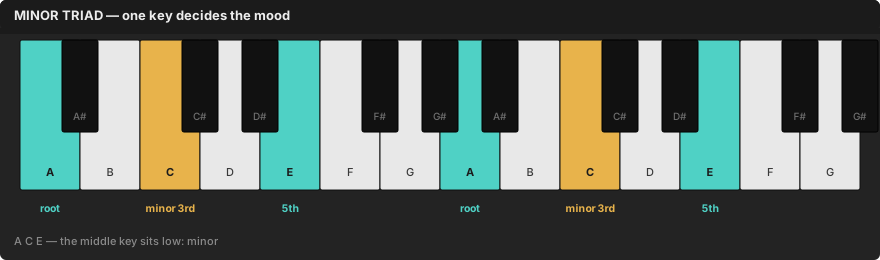
MINOR TRIAD
Root + minor 3rd + 5th. Dark.
Example: A–C–E.
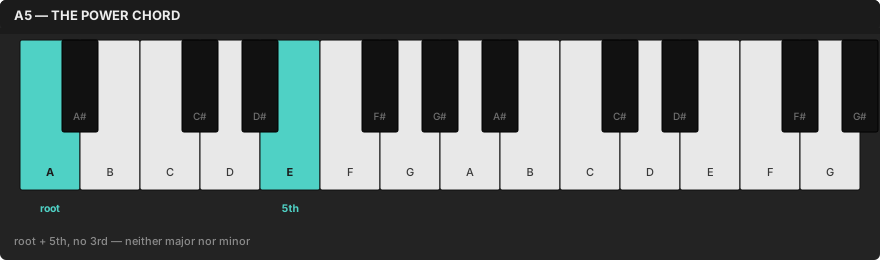
POWER CHORD
Root + 5th, no third. Neither major nor minor.
Example: A–E — the cheat code.
SEVENTH CHORD
A triad plus a 7th note. Four notes.
Example: A–C–E–G is Am7.
TRIAD
Three notes stacked in thirds. The basic chord.
Example: A–C–E.
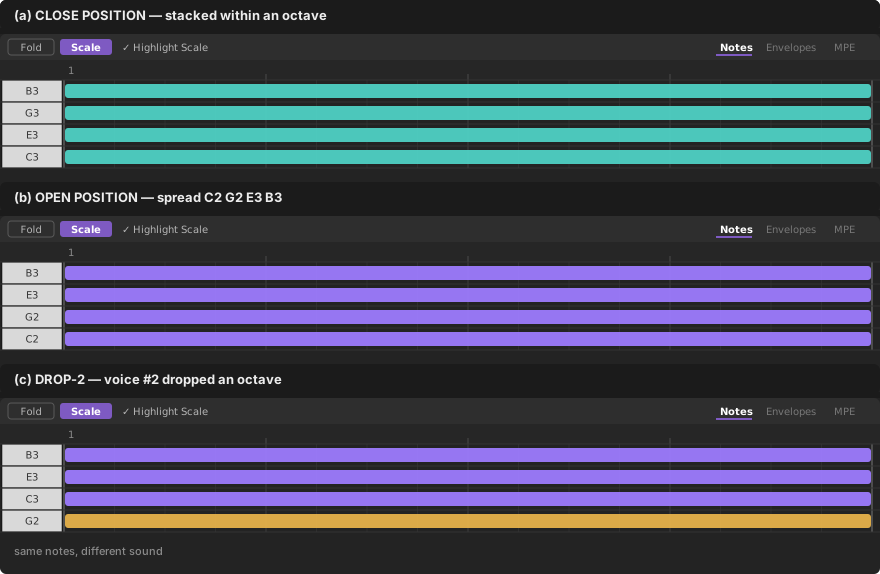
VOICING
How a chord's notes are spread across octaves. Same notes, different spacing, different sound.
Example: tight cluster vs wide open.
Rhythm & groove
Time, feel, and the pocket. Everything that makes people move.
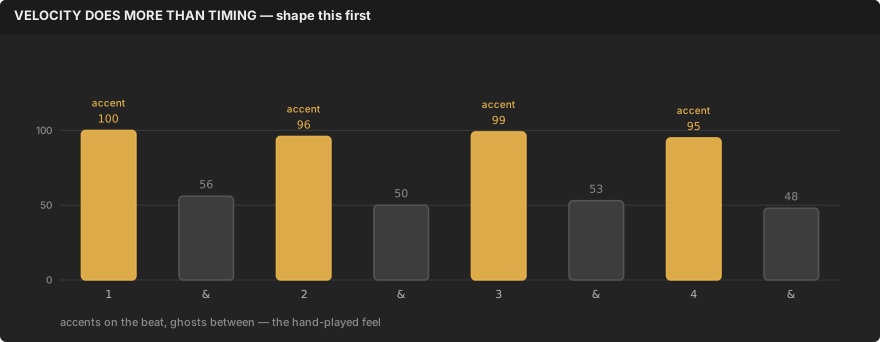
ACCENT
A hit played harder than the rest. Makes the groove breathe.
Example: hats at 95, 60, 90, 58.
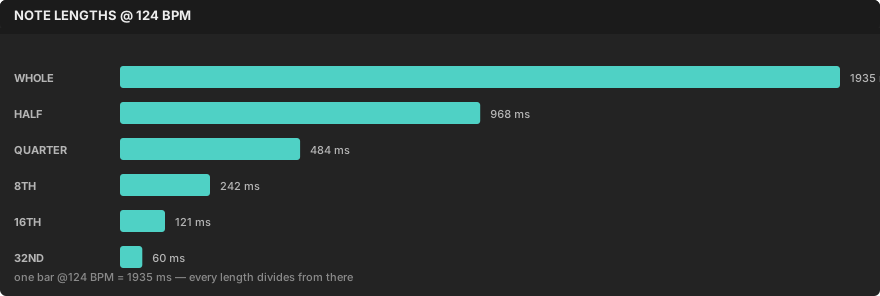
BAR
A group of beats. In house, 4 beats.
Example: one bar at 124 BPM lasts about 2 seconds.
BEAT
One foot-tap. The pulse you nod to.
Example: four-on-the-floor = a kick on every beat.
BPM
Beats per minute. The speed of the track.
Example: tech house lives around 124–128.
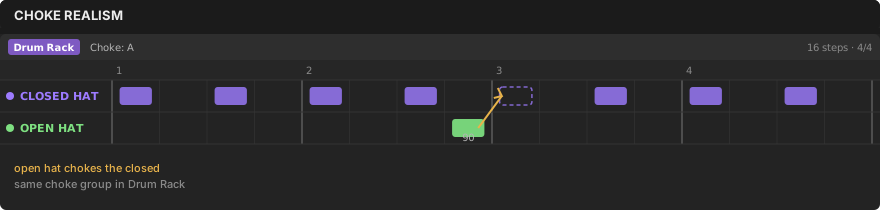
CHOKE GROUP
Sounds that cut each other off, like a real hi-hat.
Example: open and closed hats in one choke group.
DOTTED NOTE
A note plus half its value again. Longer, with a lopsided feel.
Example: dotted 8th + 16th = the driving house rhythm.
DOWNBEAT
The first beat of the bar. The strongest one.
Example: the kick lands on the downbeat.
EIGHTH NOTE
Half a beat.
Example: offbeat 8th hats — the "tss-tss" of house.
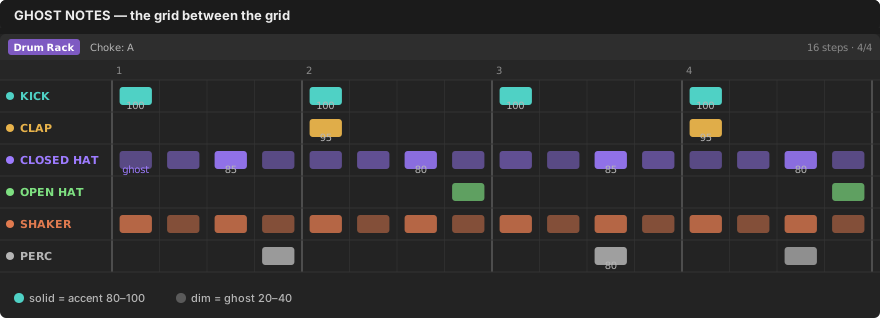
GHOST NOTE
A very quiet hit between the main hits. Felt, not heard.
Example: hat ghosts at 20–40% velocity.
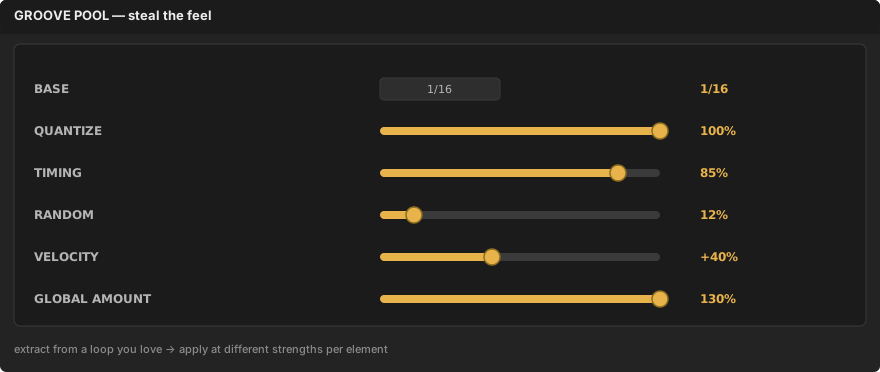
GROOVE
The whole feel: timing plus velocity plus swing, all together.
Example: extract a groove from a loop you love, apply it to your drums.
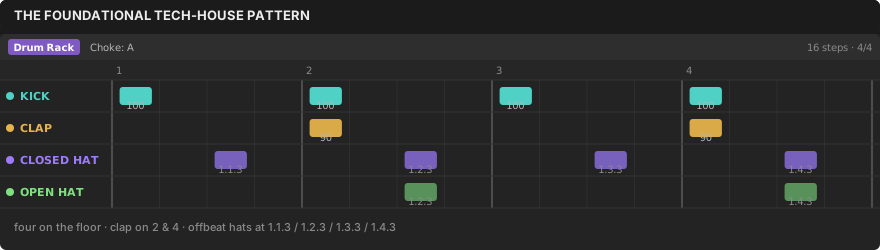
OFFBEAT
The space between beats. Where house hats live.
Example: hats on the "and" of each beat.
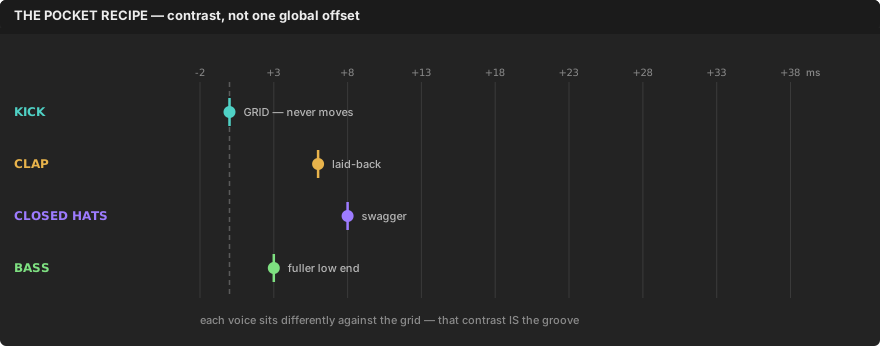
Where each part sits around the beat, held steady. The feel that makes you nod.
Example: hats a few ms late, kick dead on the grid.
QUANTIZE
Snapping notes to the grid.
Example: quantize the kick to 100%, leave the hats loose.
QUARTER NOTE
One full beat.
Example: the four-on-the-floor kick.
SHUFFLE
Swung 8th notes with a heavy triplet feel.
Example: the blues "boom-chick" lope.
SIXTEENTH NOTE
A quarter of a beat. The energy dial.
Example: 16th hats drive the track forward.
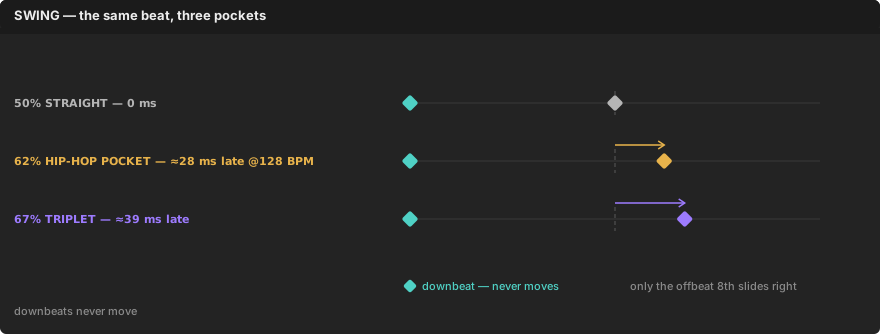
SWING
Pushing the offbeat notes later. The downbeats don't move.
Example: hats at 58% swing.
SYNCOPATION
Accents landing off the beat. Surprise rhythm.
Example: a clap hitting just before beat 3.
TRIPLET
Three notes in the time of two. A rolling feel.
Example: triplet hats over a straight kick.
VELOCITY
How hard each hit lands. Loud vs soft.
Example: ghost notes at 30, accents at 95.
Bass & sound
The low end and how it sits in the mix.
BASSLINE
The low melody. Carries the groove and the chords.
Example: A1 → E2 → A2.
MONO
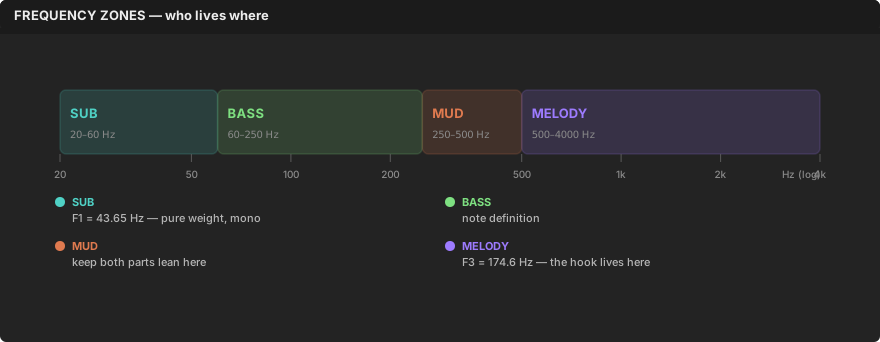
One channel, no stereo width. Sub bass must be mono.
Example: Utility's Bass Mono below ~120 Hz.
PEDAL TONE
One note held while everything else moves.
Example: park the bass on A through the breakdown.
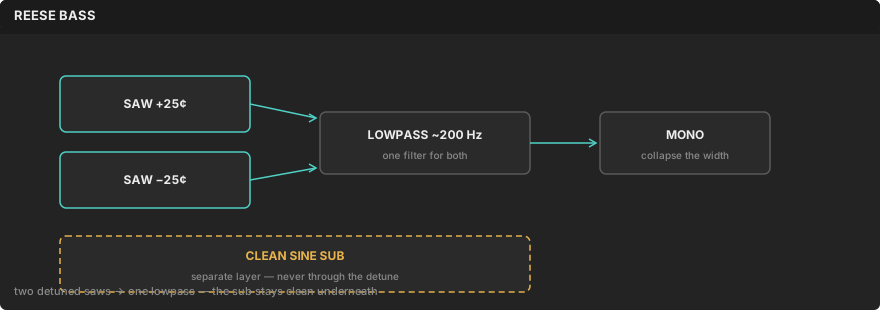
REESE
Two detuned saws through a lowpass. Thick, moving bass.
Example: saws ±25 cents, filter around 200 Hz.
SIDECHAIN
Ducking one sound under another. Makes room for the kick.
Example: bass dips 3–6 dB every time the kick hits.
SUB BASS
The deepest layer, 20–60 Hz. Pure weight.
Example: a sine wave playing the roots, mono.