Minor scales & their major modes
Three minor scales. Seven modes. One-note swaps. The whole modal vocabulary of tech house, drawn from a single root.
A semitone is the smallest step on a keyboard. One key to the next.
W means a whole step: two keys. H means a half step: one key.
| SCALE | SEMITONES | STEPS | IN A | THE 7TH |
|---|---|---|---|---|
| Natural minor (= Aeolian) | 0–2–3–5–7–8–10 | W–H–W–W–H–W–W | A B C D E F G | b7 (G) |
| Harmonic minor | 0–2–3–5–7–8–11 | W–H–W–W–H–A–H | A B C D E F G# | 7 (G#) |
| Melodic minor (jazz) | 0–2–3–5–7–9–11 | W–H–W–W–W–W–H | A B C D E F# G# | 7 (G#) |
Takeaway: natural minor is the default sad scale. Harmonic minor pulls home harder. Melodic minor smooths the gap.
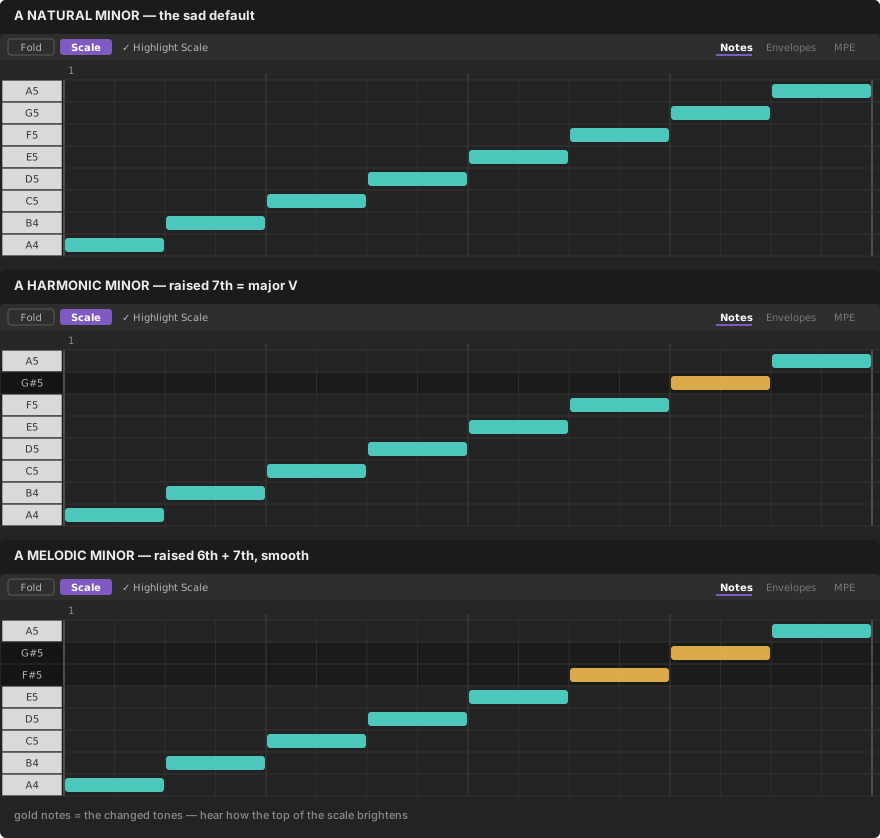
Diagram: built for this lesson
Natural minor in A is A B C D E F G. The default minor sound your ear already knows.
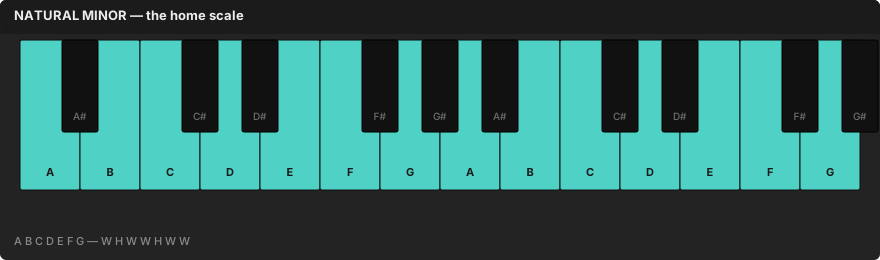
Diagram: built for this lesson
Harmonic minor raises the 7th: G becomes G#. Same notes otherwise.
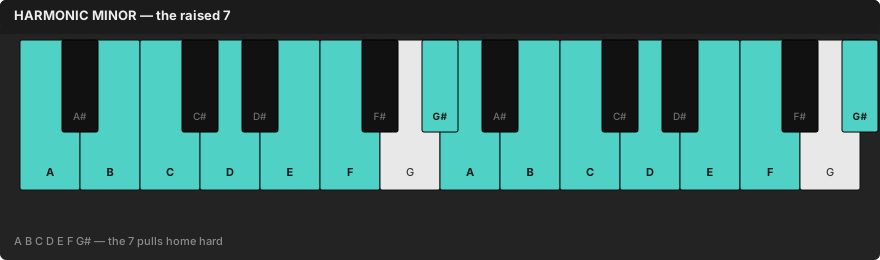
Diagram: built for this lesson
Melodic minor raises the 6th and the 7th: F# and G#. Brighter and smoother.
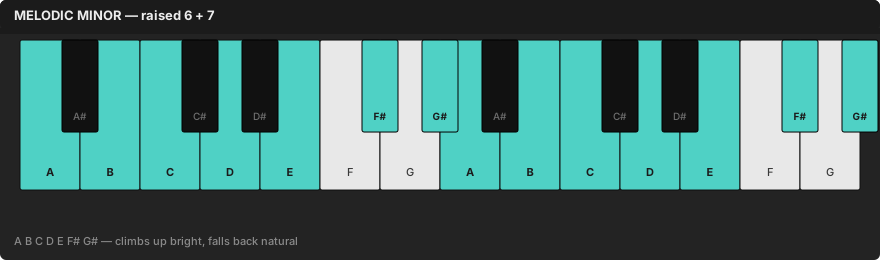
Diagram: built for this lesson
Natural minor has one weakness. The chord on the 5th note (the V chord) is minor. In A minor that is E–G–B.
A minor V barely pulls you home. So the return to A feels weak.
Harmonic minor fixes exactly that. Raise the 7th note: G becomes G#.
Two things happen. G# becomes a leading tone: the note one key below home that pulls up into it.
And the V chord becomes major (E–G#–B). That pulls home hard.
The price: F to G# is a 3-key leap. That wide jump is the "Eastern" flavor. Dramatic. A little wild.
Melodic minor raises the 6th too (F#). Now the gap is all whole steps.
It is smoother to sing. But it is brighter, almost major-sounding. That is why it reads jazzy, not dark.
NATURAL — THE HOME BASE
Sad and inward. The default. Your loops live here. Since the V chord is weak, your drops resolve with groove and arrangement — not harmony.
HARMONIC — THE DRAMA
Raise the 7th. You get a leading tone and a major V. Use it when the track needs a real turnaround into home. The drop lands harder because the harmony pointed at it.
MELODIC — THE SMOOTH
Both raised. In tech house it mostly shows up as borrowed color. Raise the 6th in an A-minor bassline and you get Dorian brightness (see 01c).
A mode is a scale with a different home note. Same pool of notes as the major scale. Different note treated as home.
Learn them in parallel: same root, different notes. Do not learn them as "C major starting on D". That tells you nothing about how they sound.
b means one key lower. # means one key higher.
Every mode has one color note. That is the one note that makes it sound like itself. Put it in your bassline or stab.
| MODE | SAME ROOT, DIFFERENT NOTES | COLOR NOTE | FAMILY |
|---|---|---|---|
| Ionian | 1 2 3 4 5 6 7 | — (it IS major) | Major |
| Dorian | 1 2 b3 4 5 6 b7 | 6 (F# in A) | Minor |
| Phrygian | 1 b2 b3 4 5 b6 b7 | b2 (Bb in A) | Minor |
| Lydian | 1 2 3 #4 5 6 7 | #4 (D# in A) | Major |
| Mixolydian | 1 2 3 4 5 6 b7 | b7 (G in A) | Major |
| Aeolian | 1 2 b3 4 5 b6 b7 | b6 (F in A) | Minor (natural minor) |
| Locrian | 1 b2 b3 4 b5 b6 b7 | b5 (Eb in A) | Unstable (rare as a home) |
Takeaway: each mode is one or two notes away from the one next to it. Learn the color note, not the formula.
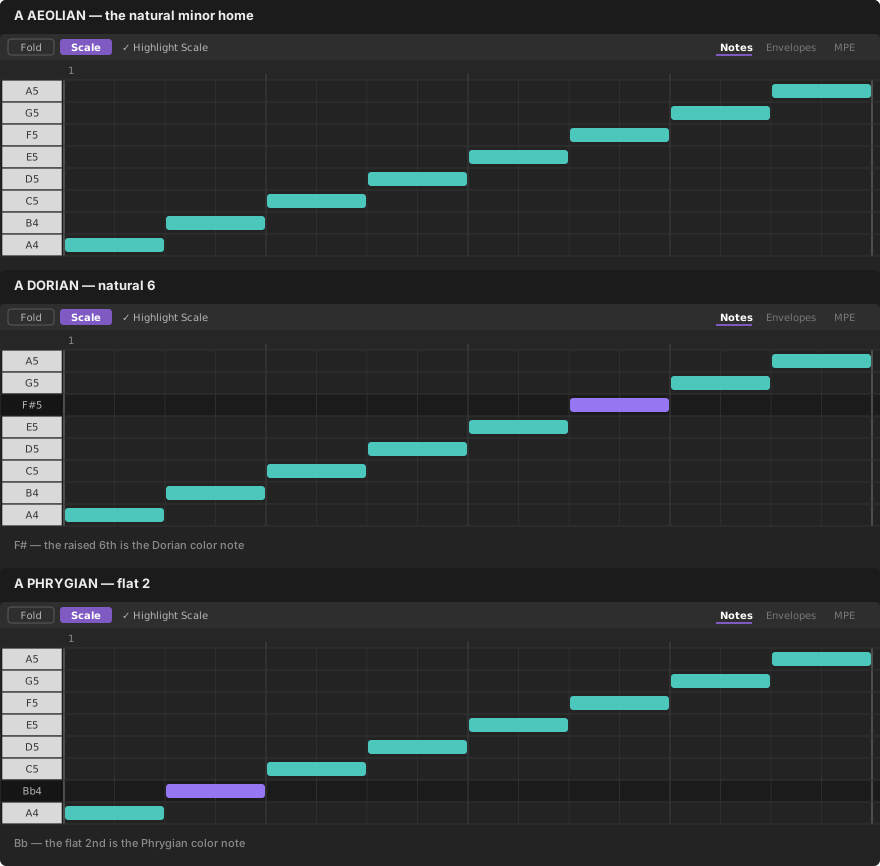
Diagram: built for this lesson
Dorian is minor with a raised 6th. F becomes F#. The track lifts but stays minor.
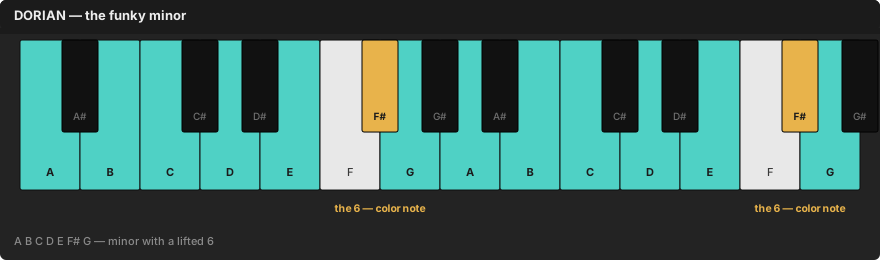
Diagram: built for this lesson
Phrygian is dark and tense. Its color is the flat 2nd: Bb in A.
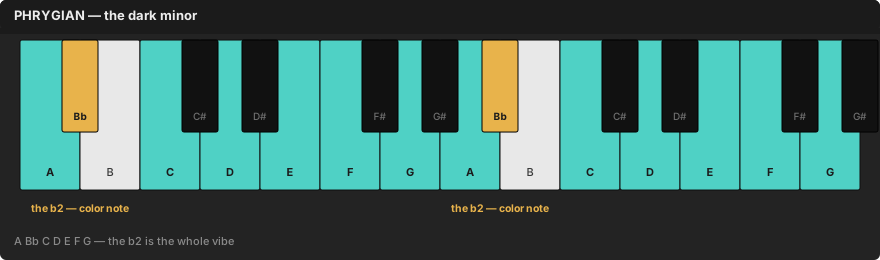
Diagram: built for this lesson
Lydian is major with a raised 4th. Floaty and dreamy.
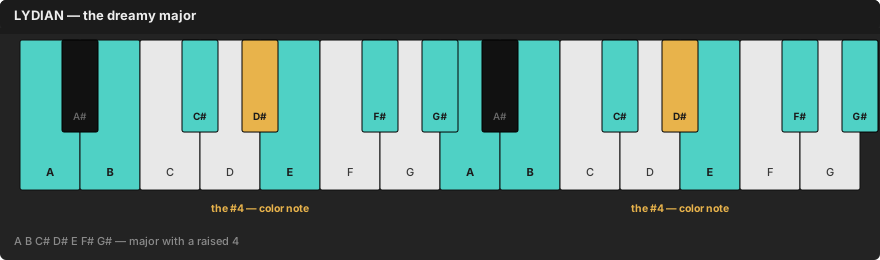
Diagram: built for this lesson
Mixolydian is major with a flat 7th. Funky. No strong pull home.
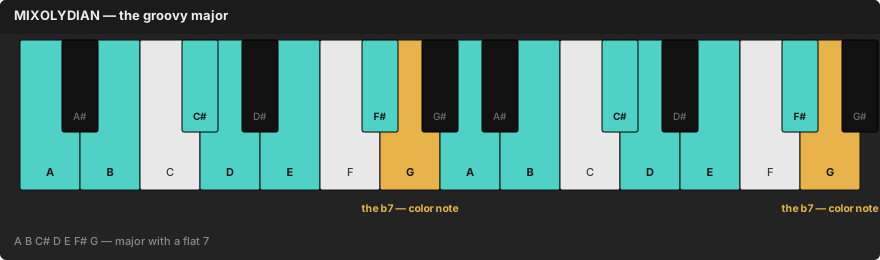
Diagram: built for this lesson
Aeolian is natural minor. Your home base.
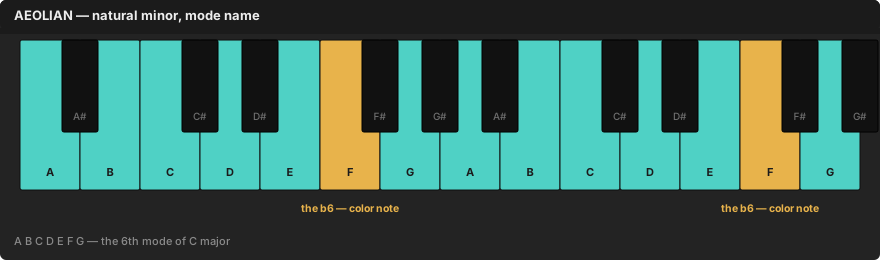
Diagram: built for this lesson
Locrian is the unstable one. Its home chord is a dark, unstable chord. Almost never used.
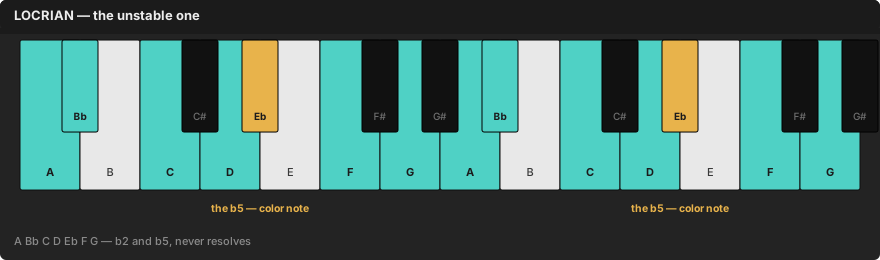
Diagram: built for this lesson
Keep the root fixed and the modes run bright to dark. Count the flattened notes.
Lydian → Ionian → Mixolydian → Dorian → Aeolian → Phrygian → Locrian.
Play each from the same root. Listen for the one changed note. That is the whole ear-training exercise.
In tech house you live in Aeolian, Dorian, and Phrygian. Locrian's home chord is diminished. So it almost never anchors a track.
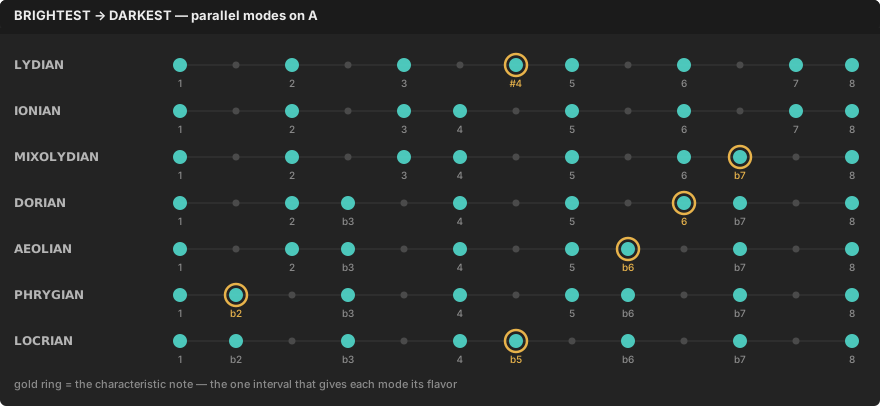
Diagram: built for this lesson
Relative means two scales share the same notes. A Aeolian uses exactly the C-major notes. Same pool. Different home.
Parallel means the same root with different notes. A Dorian vs A Phrygian vs A Aeolian.
The parallel view is the useful one. It shows you the character.
Here is the insight that matters: home is made by the bass, not the note pool.
The notes do not tell you the key. The bass does, plus where your phrases land.
Draw a C-major clip. Put A in the bass. End your phrases on A. Now the same white keys sound like A minor.
Nothing about the notes changed. Only home moved.
Load the Scale MIDI effect set to A minor. Then Fold the piano roll. Fold hides every note that is not in the scale.
Draw a loop. Now change exactly one note: F → F# and you are in Dorian. The track lifts. Still minor, but brighter.
Put it back. Change B → Bb and you are in Phrygian. Darker. Tenser.
One note swaps the mode. Tech house's whole modal vocabulary is Aeolian plus these two swaps.
The 5th mode of harmonic minor. Formula: 1–b2–3–4–5–b6–b7.
In A: A–Bb–C#–D–E–F–G.
Compare it to regular Phrygian. One difference: the 3rd is major. C# instead of C.
That one change is everything. Stack 1–3–5–b7 (A–C#–E–G). You get a dominant 7th chord: a four-note chord that pulls hard back home.
"Dominant" here means one thing: this scale works as a V chord, pulling toward the minor home.
Other names: Hijaz, Freygish, Spanish Gypsy scale, Mixolydian b9 b13 (the jazz name).
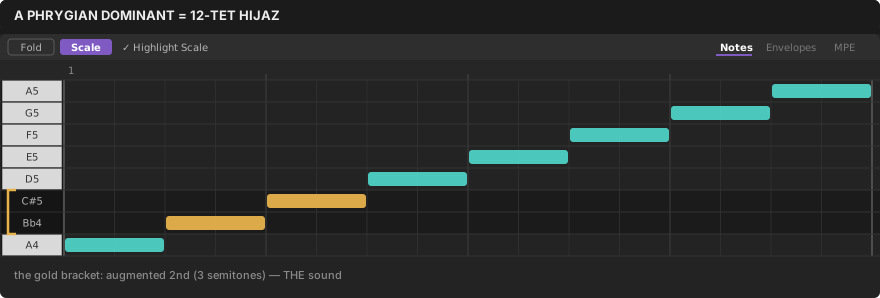
Diagram: built for this lesson
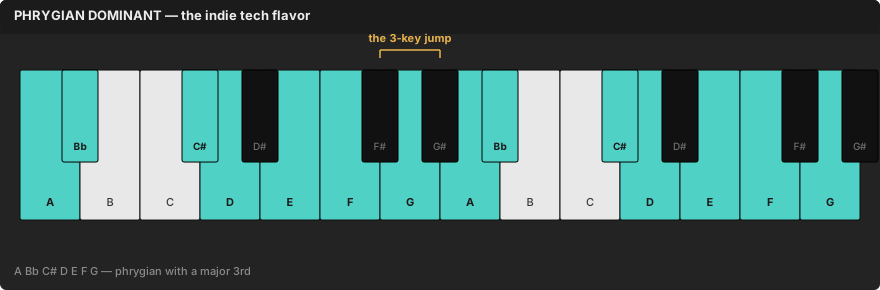
Diagram: built for this lesson
The instant signature is the wide leap between the flat 2nd and the major 3rd. Bb to C#: three keys in one jump.
Your ear reads it as Middle Eastern or flamenco before the phrase finishes.
In a track, treat the scale's root as the V. Play your riff in A Phrygian Dominant. Resolve it to D minor.
Or use A as a dominant color inside A minor.
The classic move is the Andalusian cadence. A three-chord walk home.
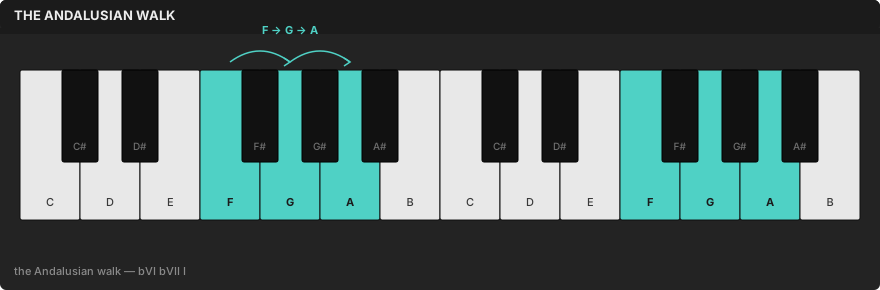
Diagram: built for this lesson
The fuller version stacks the full chords. That E major is the V pulling you home.
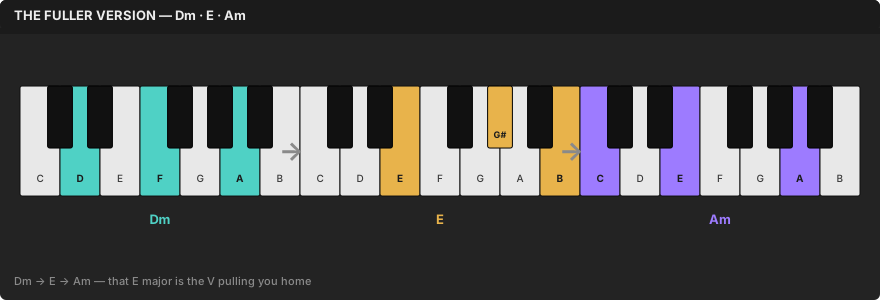
Diagram: built for this lesson
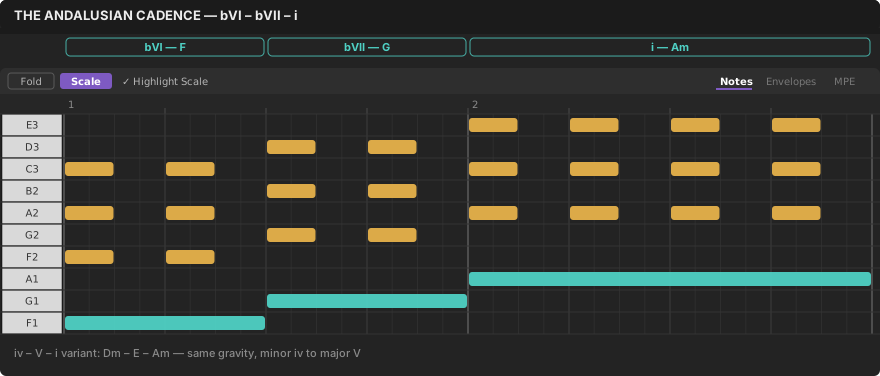
Diagram: built for this lesson
Borrowing means taking one chord or note from a parallel mode. Same root. Different mode.
AEOLIAN ↔ DORIAN
The one-note swap: F↔F# in A minor. Raise the 6th in the bassline or stab — a D major chord inside an Am track — and the track lifts. Keep it flat and it stays dark. The most borrowed note in the genre.
THE MAJOR V
Borrow the major V from harmonic minor: E major in A minor. Stronger drop. The oldest trick in the book — it comes straight from the raised 7th.
FLAMENCO MIXING
Real flamenco mixes natural Phrygian, Phrygian dominant, and major chords over one pinned bass note. Keep A in the bass. Alternate Am and A-major-flavored stabs. The hybrid is the tradition.
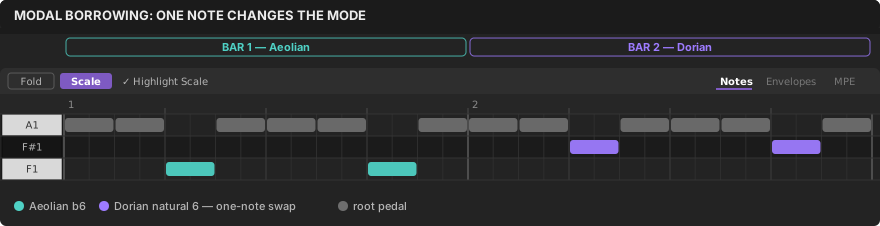
Diagram: built for this lesson
1 · "DORIAN = C MAJOR FROM D"
True as a note pool. Useless as music. The bass sets home, not the starting note.
2 · CHORD CHANGE ≠ MODE CHANGE
A G chord inside C major is not "G Mixolydian". Modes name the home, not the passing chords.
3 · LETTING V–I SNEAK IN
One strong V-to-home pull drags your ear back to plain major/minor. Modal loops need modal landings.
4 · APPLYING MODES AFTER
Pick the mode when you write the bassline. Do not try to sprinkle it on a finished track.
5 · MOVING PATTERNS, NOT ROOTS
Copying a MIDI pattern up a few keys does not change the mode. The bass does.
6 · ONE MODE PER TRACK
No such law. A Dorian verse into an Aeolian chorus is normal. Modes are sections, not prisons.