Melody-to-bassline relationship
Roles, frequency zones, tech-house patterns, and the kick/bass repair order. One job each, never fighting.
The bass has two jobs. The groove: if the bass does not move the track, nothing does.
And the harmony: it is the lowest melody, and every synth above it leans on it.
The melody's job is the opposite: the hook, the emotion, the thing people hum.
So the two parts should never compete for the same job at the same time.
Hz means vibrations per second. Low Hz is low pitch.
Sub 20–60 Hz: pure weight. Mono. Sine or triangle waves only.
Bass 60–250 Hz: where you hear the actual notes.
Low mids 250–500 Hz: the mud zone. Keep both parts lean here.
Melody 500 Hz and up.
Concrete example. In F minor, put the sub root at F1 (43.65 Hz). Keep the hook at F3 (174.6 Hz) or higher.
That is two full octaves apart.
If the melody dips below ~250 Hz, it is sitting on the bass's lap. Move the melody up or thin the bass.
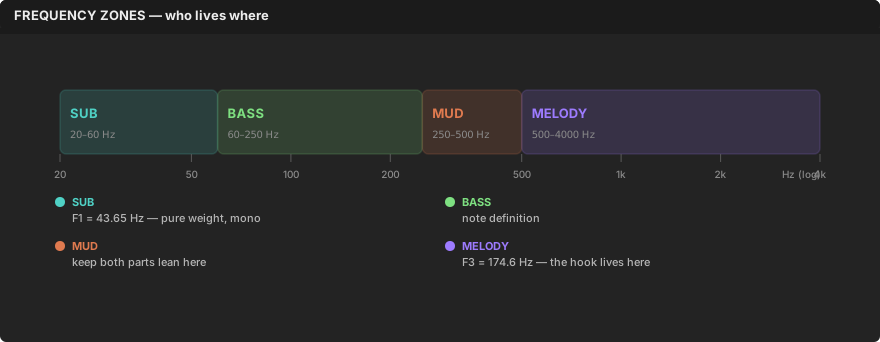
Diagram: built for this lesson
Takeaway: two octaves between sub and hook. Each part owns its own zone.
The bass defines the chord. Even when the synths above play fancy inversions, your ear hears the chord's identity from the bass note.
The hierarchy, safest first: root → octave → 5th → flat 7th → flat 3rd for color.
Roots on beats 1 and 3 is the default that just works. The bass announces each change.
The 5th is the safe second note. A1 → E2 → A2 adds motion without changing the chord.
The flat 7th is the tech-house signature. A1 → A2 → G2. Groove and attitude, no chord change implied.
The flat 3rd is color. Use it mid-phrase for clarity, not as the note you land on.
Two more tools. The pedal tone: one note held while everything above it moves. The breakdown device.
The chromatic approach: a note one key below your target that slides into it. Example: G#1 → A1. One per phrase, max.
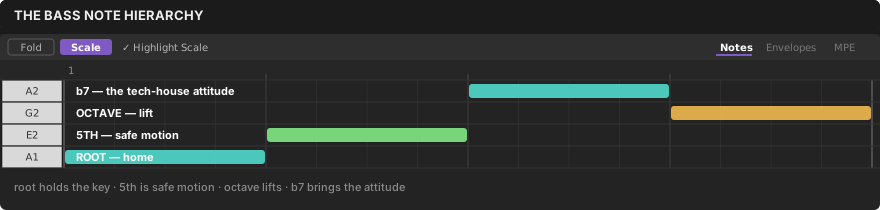
Diagram: built for this lesson
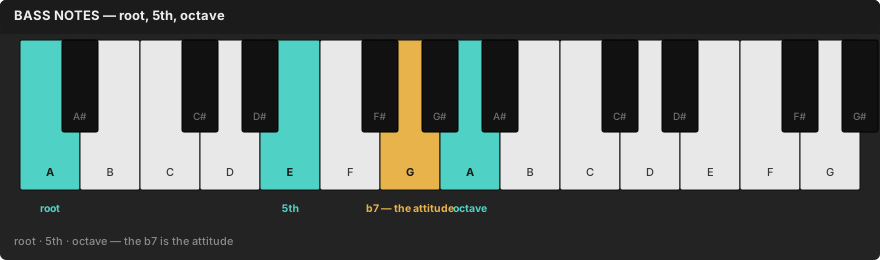
Diagram: built for this lesson
Three ways two parts can move. You already use all of them.
CONTRARY — THE DEFAULT
One up, one down. The hook rises, the bass falls or holds. They stop covering each other up. Each line stays audible. The default for a reason.
OBLIQUE — THE BREAKDOWN
One holds, one moves. A held bass note under a moving melody. Or a held melody note over a moving bass. Maximum independence. Static bass plus moving top is the breakdown formula.
PARALLEL — THE DANGER
Same direction, same gap. The bass swallows any melody note an octave or a fifth above it. A1–C2–E2 in the bass against A2–C3–E3 in the lead, same rhythm: that is not two parts. It is one part with a shadow. Fix it: offset the rhythm, use thirds or sixths (they survive parallel motion), or separate the parts by two octaves.
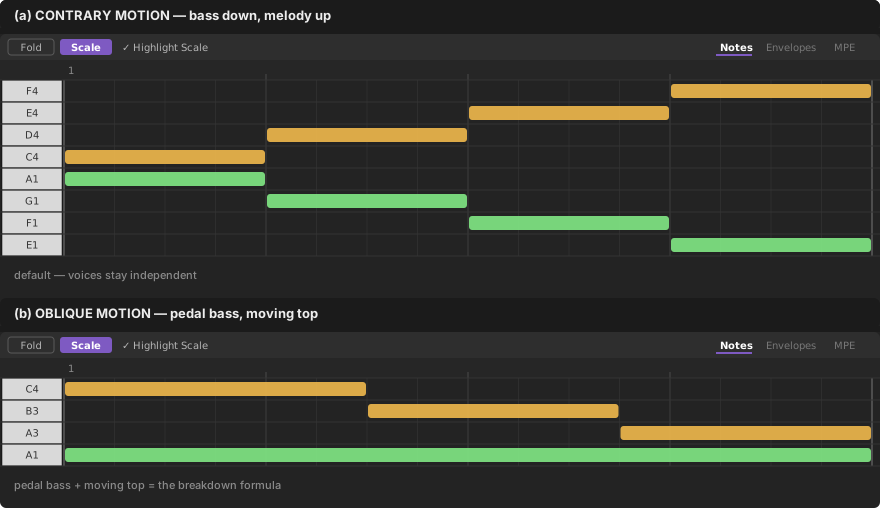
Diagram: built for this lesson
The rule: busy bass + sparse melody, or sparse bass + busy melody. Never both busy at once.
Staccato means short, separated notes. A jumpy staccato bassline speeds the track up.
Legato means smooth, connected notes. Long legato notes slow it down.
Alternate across sections. Contrast between sections matters more than complexity inside one.
DISPLACEMENT
Put bass notes in the melody's gaps. Hook hits on the beats. Bass answers on the offbeats and the little pickup notes before them. A bass note arriving an eighth-note before the downbeat while the melody lands on it: that is forward pull.
GHOST NOTES
Very quiet 16th notes in the bass. Low velocity. Felt more than heard. They add rhythmic texture without adding melody. The funk trick for making a simple root pattern groove.
CALL-AND-RESPONSE
The club arrangement: hook playing means bass simplifies to roots and pocket. Hook out means bass gets busier: fills, octave jumps, the flat 7th. They trade the spotlight bar by bar. Never both soloing at once.
The working set at 124–128 BPM.
Offbeat bass. Notes on the "and" between beats.
It never hits at the same time as the kick. So it never fights it.
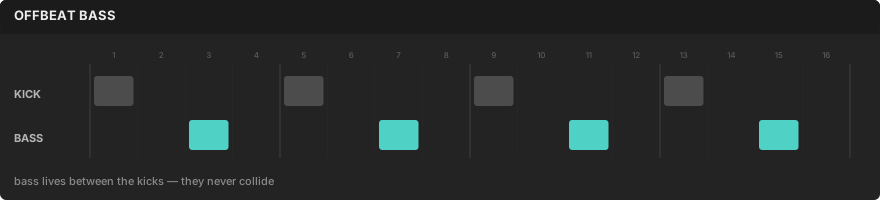
Diagram: built for this lesson
Rolling bass. 16th notes: root–root–octave–root, or root–b7–octave–b7.
Velocity variation does the driving.
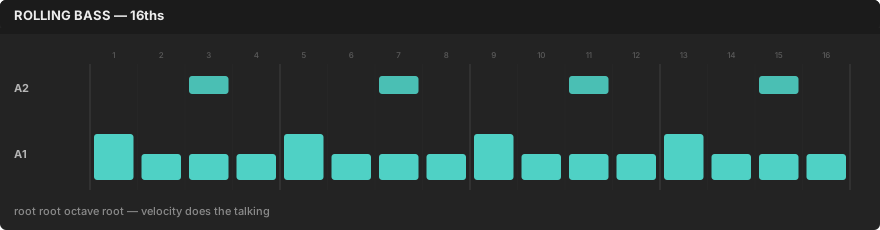
Diagram: built for this lesson
Two-note bassline. Root and octave. Or root and flat 7th.
The groove comes from rhythm and sound, not from many notes.
Reese. Two detuned saws: two saw waves tuned slightly apart, ±25 cents.
Run them through a lowpass filter around 200 Hz. Mono. Use glide between notes.
Play long roots and fifths. The movement comes from the filter.
Keep a separate clean sine sub underneath. High-pass the detuned layer around 80–100 Hz.
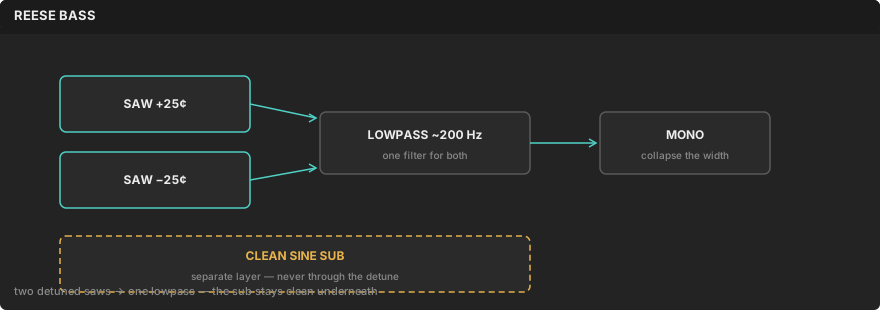
Diagram: built for this lesson
Acid. One voice. Notes glued together (legato). Resonant lowpass filter.
Play root–b3–5–b7. Push accents to open the filter.
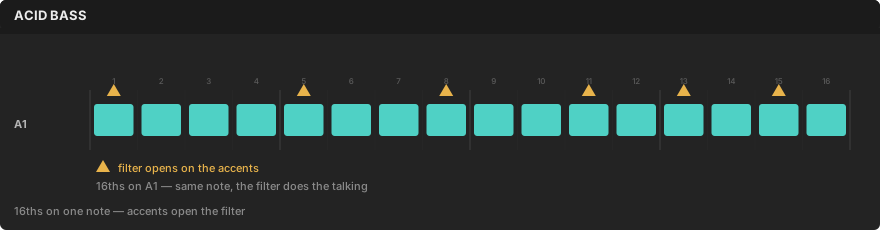
Diagram: built for this lesson
Note choices in minor-key tech house, most to least common: root, octave, 5th, flat 7th.
The flat 3rd shows up for color. The 2nd, 4th, and 6th are passing notes only.
A 2-bar loop in F minor: F1–F1–Ab1–F1 | F1–Eb2–F2–Eb2.
Root, flat-3rd color, flat-7th groove, octave lift.
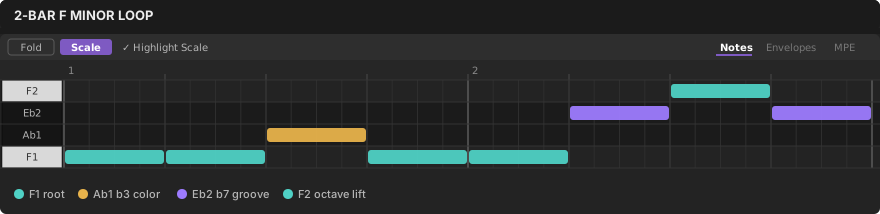
Diagram: built for this lesson
Fix kick/bass clashes in this order: sound choice → timing → tuning → sidechain LAST.
Do not reach for the compressor first.
Pick sounds that fit together. A deep boomy bass wants a punchy thin kick.
Offbeat bass skips the problem entirely.
If the bass must hit with the kick, keep the kick short. Then the bass has somewhere to live.
Tune the kick to the track's key.
Then sidechain: the kick automatically dips the bass for a moment. 3–6 dB of dip. Fast attack (10–20 ms). Release around 150–250 ms.
The caveat that saves hours: if both the kick and the bass are long, ducking just turns one of them down for most of its life. Shorten one of them instead.
SUB + MID LAYERING
Split the job. A clean sine or triangle sub (mono, 20–60 Hz, playing exactly the roots). Plus a characterful mid-bass (high-passed around 80–100 Hz) for texture and for pitch you can hear on small speakers. Group them. Glue lightly.
MONO BELOW ~100 HZ
Everything except the kick rolls off below ~100 Hz. Bass under ~100–120 Hz must be mono (Utility's Bass Mono). Wide low end cancels out on club systems.
MICRO-TIMING
Bass a few milliseconds behind the kick (2–6 ms) sounds tight but fuller. The two stop blending into one blob. If the kick loses punch when they hit together, try flipping the phase on one of them. (Phase is whether the waveform pushes or pulls. Flipping it is the polarity invert switch.)
1 · SAME HZ, SAME MS
Kick and bass fighting for the same frequencies at the same time. Fix order: sound, timing, tuning, sidechain. Not the reverse.
2 · MELODY ON THE BASS'S LAP
Hook dipping into 100–250 Hz is standing on the bass. Move the melody up an octave or thin the bass.
3 · PARALLEL FUSION
Parallel octaves or fifths between bass and melody melt two lines into one. The texture goes flat.
4 · TOO MANY BASS NOTES
The #1 beginner trap. Root, 5th, octave, flat 7th with rhythmic imagination beats a scale run every time. Put the complexity in rhythm and sound, not in note count.
5 · SUB AN OCTAVE TOO DEEP
F0 (21.9 Hz) is mud on most systems. You feel nothing and hear nothing. Grab all the bass MIDI and try it an octave up. Club subs want 40–65 Hz.
6 · LONG + LONG
Long bass under a long four-on-the-floor kick: permanent masking no sidechain can fix. Shorten one of them.