Intervals: thirds, fifths, sevenths + note spacing
The distances between notes decide everything: major vs minor, power vs tension, the house stab, and how far apart to space a chord.
An interval is the distance between two notes. Counted in keys.
A semitone is one key to the next. The smallest step on a keyboard.
| INTERVAL | SEMITONES | CHARACTER |
|---|---|---|
| Minor 3rd (m3) | 3 | Dark, sad — the note that makes "minor" minor |
| Major 3rd (M3) | 4 | Bright, welcoming — the note that makes "major" major |
| Tritone | 6 | Maximum tension, unstable |
| Perfect 5th (P5) | 7 | Stable, powerful, hollow — the most settled sound after the octave |
| Minor 7th (m7) | 10 | Groovy, funky — barely wants to resolve |
| Major 7th (M7) | 11 | Dreamy, bittersweet — pulls hard |
| Octave (P8) | 12 | Perfect stability — the same note, higher |
Takeaway: the octave and the 5th are the most settled. 3rds and 6ths are softer but settled. 2nds, 7ths, the tritone, and stretched or shrunk intervals are restless. Build tension with them, release into settled ones.
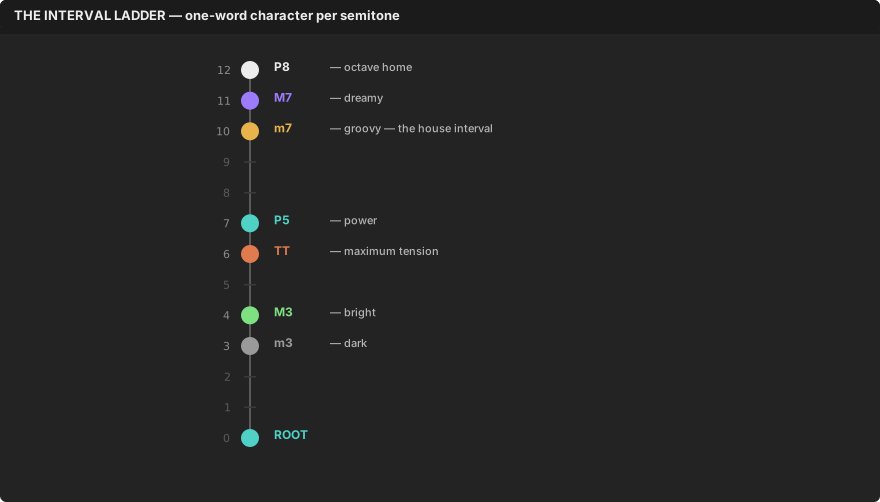
Diagram: built for this lesson
Minor 3rd: 3 keys. Dark and sad.
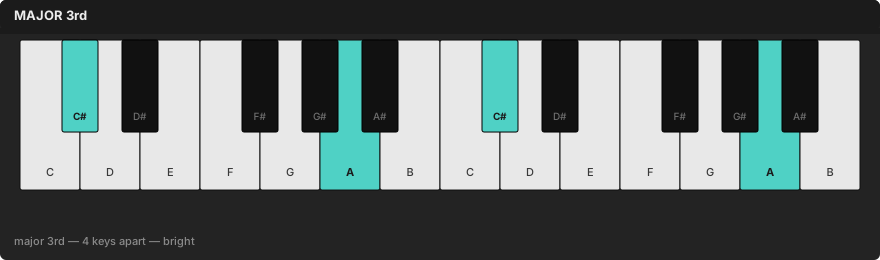
Diagram: built for this lesson
Major 3rd: 4 keys. Bright and welcoming.
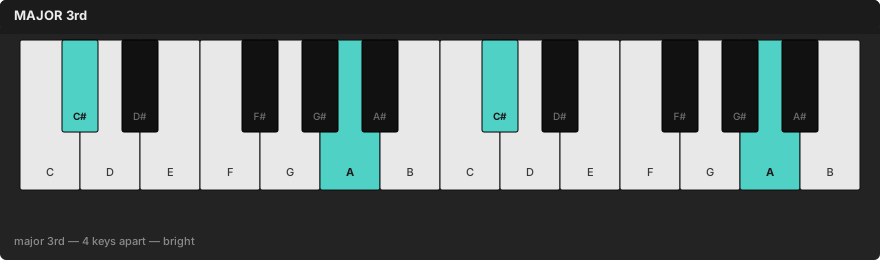
Diagram: built for this lesson
Perfect 5th: 7 keys. Stable and powerful.
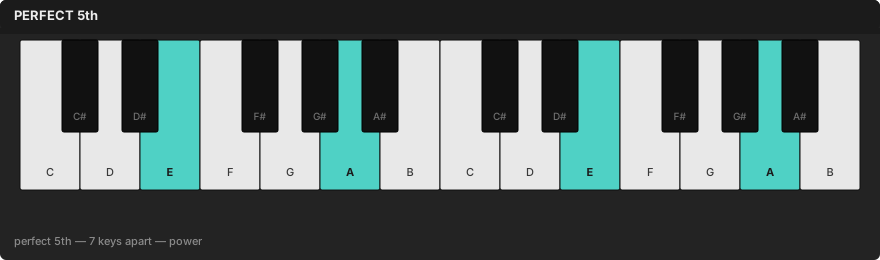
Diagram: built for this lesson
Tritone: 6 keys. Maximum tension.
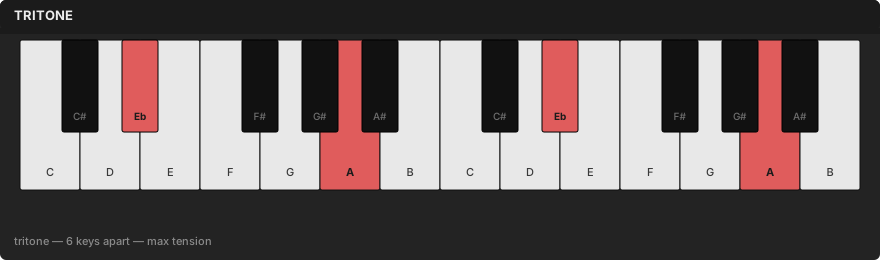
Diagram: built for this lesson
Minor 7th: 10 keys. Groovy. Barely wants to resolve.
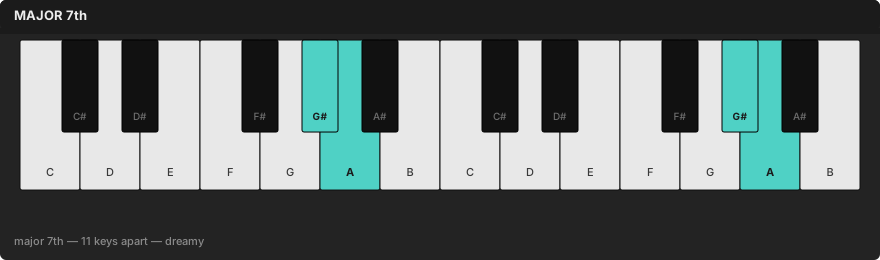
Diagram: built for this lesson
Major 7th: 11 keys. Dreamy. Pulls hard.
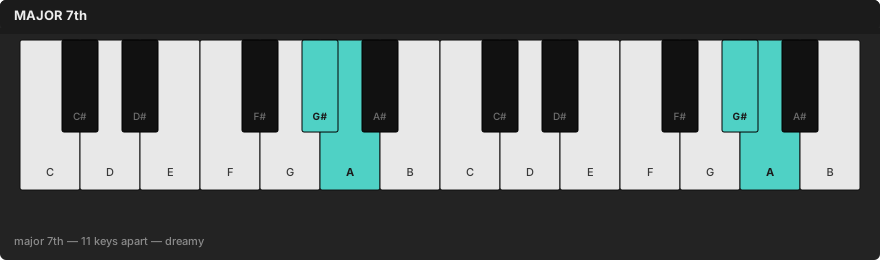
Diagram: built for this lesson
The third is the most important interval in western harmony. It alone decides whether a chord sounds major or minor.
This is a minor chord.
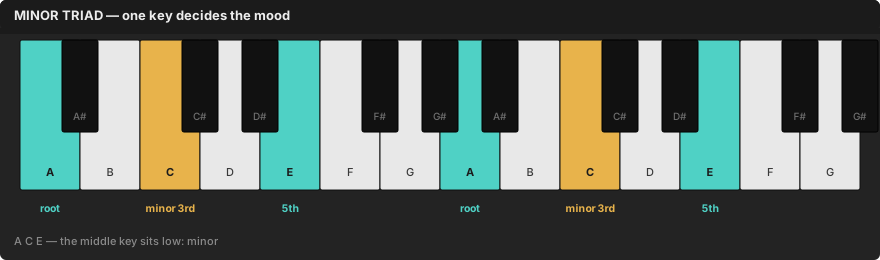
Diagram: built for this lesson
Move one key. Now it's major.
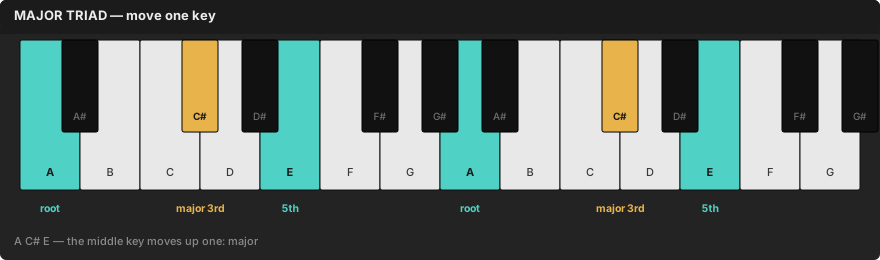
Diagram: built for this lesson
One key decides the mood.
Stacking thirds builds everything. Two stacked thirds is a triad (three notes). Add a third third on top and you have a seventh chord.
IN BASSLINES
The flat 3rd is the color note. Touch it mid-phrase to say "we are in minor": breakdowns, intros. In the drop, land on roots and 5ths. Neutrality drives harder.
IN MELODIES
The third tells the listener the chord quality. Lean on it on strong beats when you want clarity. Leave it out when you want the riff to float.
THE HOUSE SKELETON
Most tech-house stabs and riffs live on 1–b3–5–b7. Minor third, perfect fifth, minor seventh. That is the genre's harmonic fingerprint.
The perfect 5th is 7 keys. The most settled interval after the octave.
The two notes' vibrations line up in a simple 3:2 ratio. Your ear hears that as strength and clarity.
Root–5th–octave is the universal safe bass move. In A minor: A1 → E2 → A2.
The 5th adds motion without changing what the chord is.
The power chord — root + fifth, no third, written A5 — is a cheat code. Without the third it is neither major nor minor.
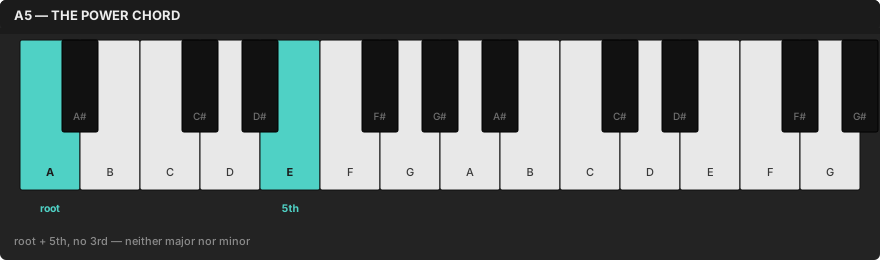
Diagram: built for this lesson
Run a minor bassline over fifth-based stabs. Or flip between major and minor ideas over the same riff. The listener accepts both.
The tritone (6 keys) is the fifth's evil twin. The most restless interval in the system.
The vibrations never line up. Your ear hears pure tension.
Its notes pull toward resolution. Inside E7 (E–G#–B–D in A minor), the G#–D tritone pulls inward to A–E.
That pull is the "attitude" inside dominant-7th stabs. Use it like spice: a passing diminished stab before a drop.
Three sevenths. Three jobs.
The minor 7th is the tech-house staple. A gentle dissonance. Groovy and funky, not tense.
The house stab.
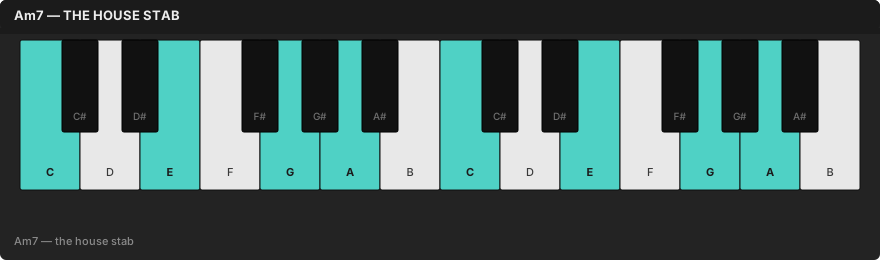
Diagram: built for this lesson
Same shape, new root.
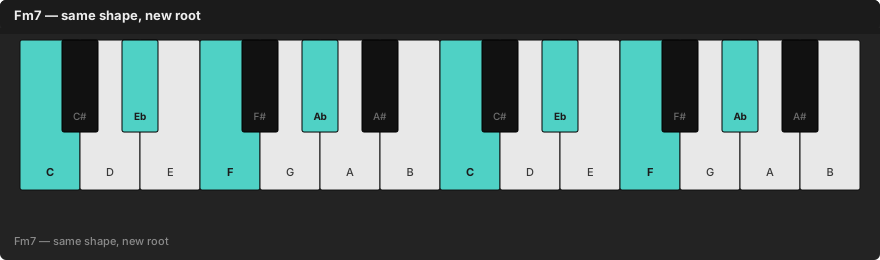
Diagram: built for this lesson
The dominant 7th is the turnaround chord. Bluesy. Restless, with forward pull.
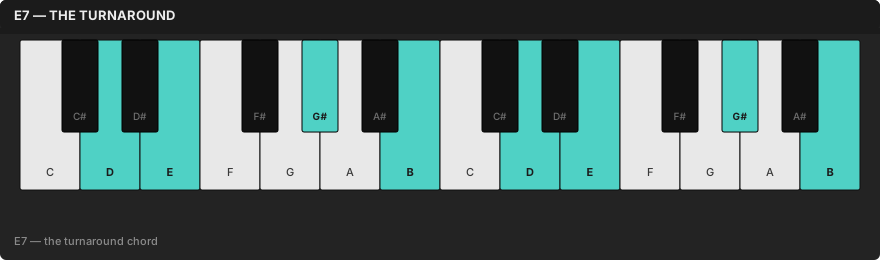
Diagram: built for this lesson
The major 7th. The dreamy one.
Strongest dissonance of the three. Save it for breakdown pads and expensive emotional moments. Not for driving drops.
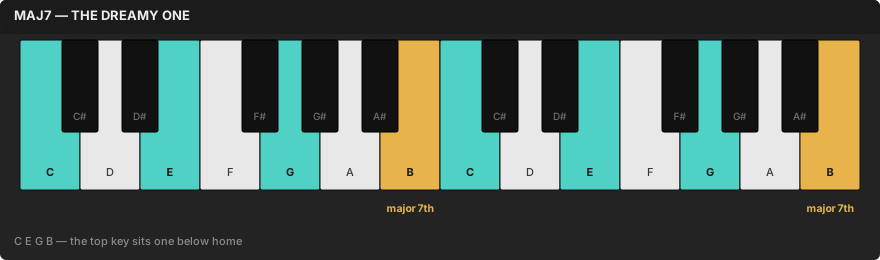
Diagram: built for this lesson
Voicing is how a chord's notes are spread across octaves. Same notes, different spacing, completely different sound.
Close position stacks the notes inside one octave. Compact. Dense. Muddies fast down low.
Open position spreads them past an octave. Airier. Clearer. Survives saturation.
Drop-2 is the classic opener. Take a close 7th chord. Count the voices 1-2-3-4 from the top. Drop voice #2 down an octave.
Cmaj7 C–E–G–B becomes G–C–E–B. Instantly wider.
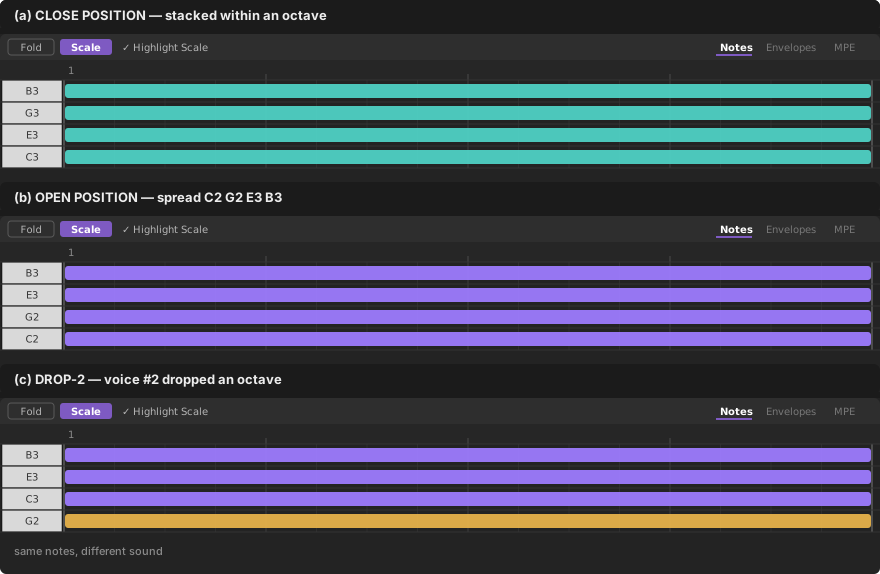
Diagram: built for this lesson
The reason: low notes need more room.
A minor 3rd at C2–Eb2 sounds muddy. The harmonics collide in the mud zone (250–500 Hz).
The same 3rd at C4–Eb4 sounds clear.
Rule: the lower the notes, the wider the spacing. Keep the bottom of a voicing on wide gaps (5ths, octaves).
Put the color notes (3rds, 7ths) higher up.
House shorthand: stabs tight around C3–C4. Nothing below ~100 Hz. That is kick and bass territory.
Pads open across 2+ octaves. Root + 5th low and wide. 3rd and 7th floating high.
High-pass pads below ~100 Hz. So the returning drop bass has somewhere to land.
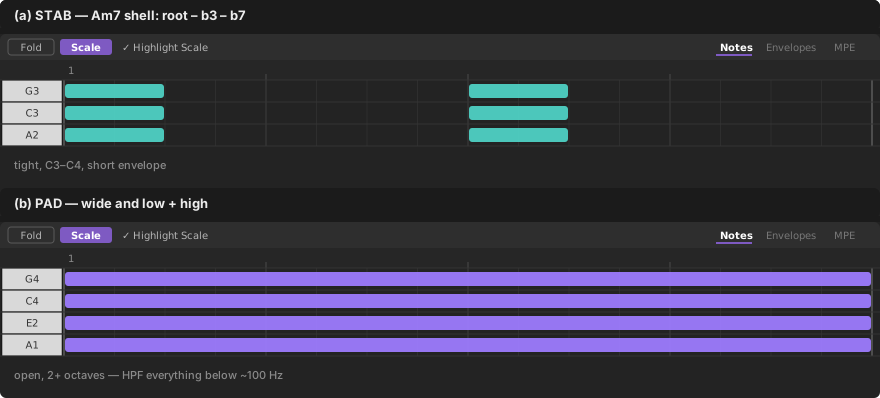
Diagram: built for this lesson
When chords change, move each note as little as possible.
The rule: keep the notes both chords share exactly where they are. Move everything else by the smallest step.
Am7 (A–C–E–G) → Fmaj7 (F–A–C–E). Hold A and C. Move E→F and G→E.
Use inversions: the same chord with a different note on the bottom. That keeps the top line smooth instead of jumping root to root.
And leave notes out. In 7th chords, the 5th goes first (it adds the least).
In bigger chords, drop the root when the bass is already playing it.
A 3-note shell (root–3rd–7th) usually beats a 4-note cluster in a dense track.
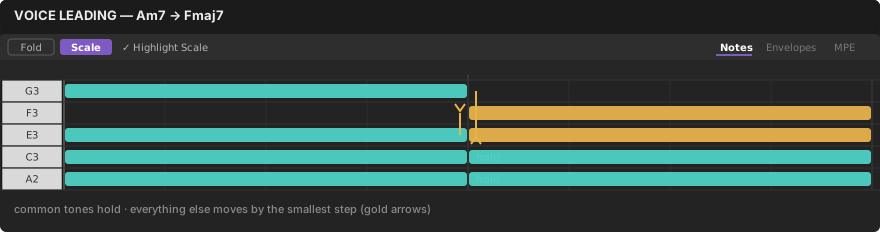
Diagram: built for this lesson
Drop the stock Chord MIDI effect before your stab instrument. Set the shifts to +3 / +7 / +10 keys.
Now one finger plays minor-7th stabs anywhere on the keyboard.
Nudge the Shift knobs to try different inversions while the loop runs. Minor third up, fifth up, minor seventh up: the whole genre in one device.
Put the Scale MIDI effect on a clip. Fold the piano roll. Draw a close 4-note voicing around C3.
Now drag individual notes up or down an octave. Fold keeps you in key while you open the spacing.
Push color notes up. Keep root and 5th low and wide.
A/B the close and open versions through your stab processing. The open one stays punchy where the close one muddies.